The Invisible Problem in Food Operations: Why Most Kitchens Lose 5–10% Without Knowing It
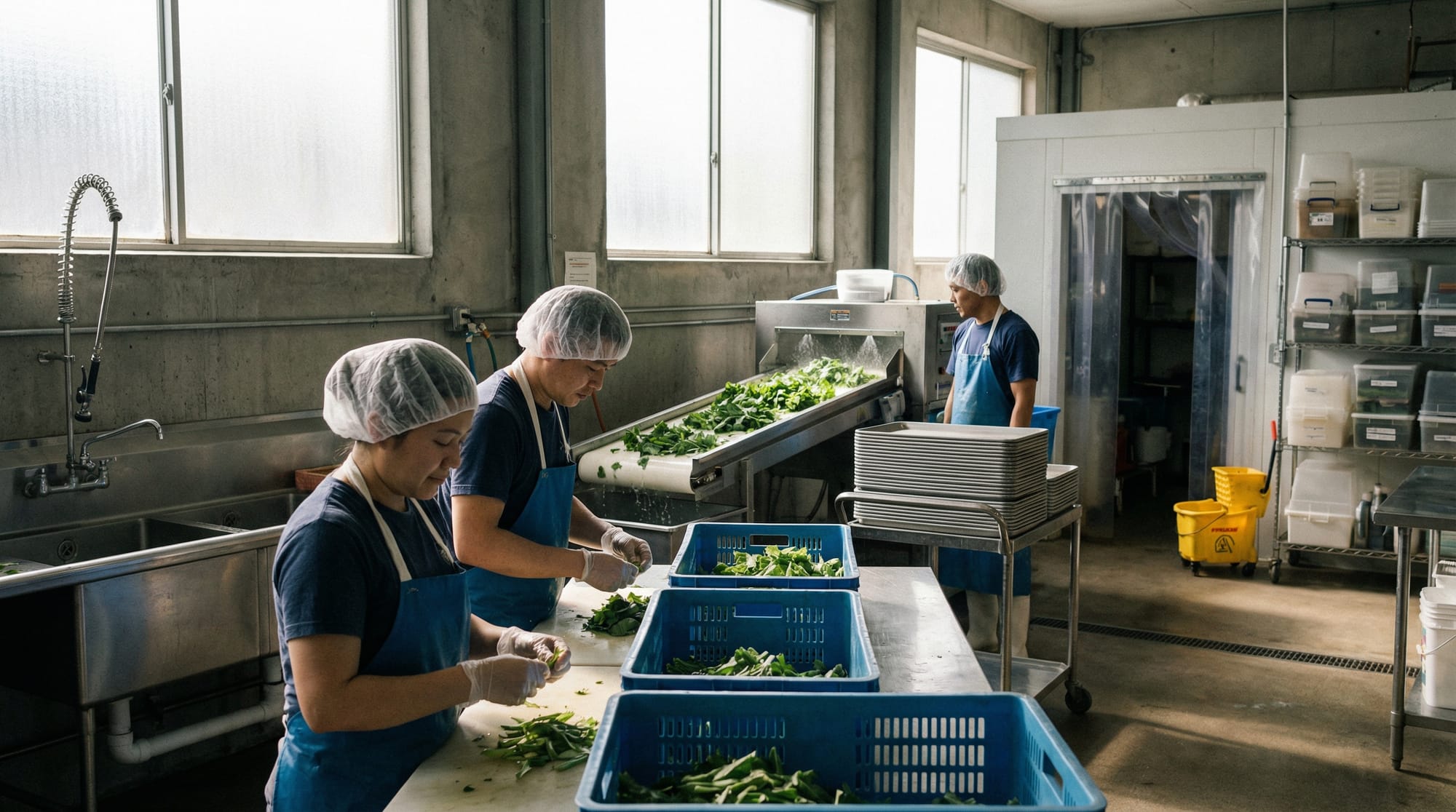
Walk into any central kitchen or food factory and everything looks under control.
Recipes are defined. Staff is trained. Production is running. Orders are being dispatched. On paper, it all works. But when you look at the numbers — especially food cost — something doesn’t add up. Margins shrink.
Wastage increases. Inventory never matches exactly. And no one can point to a single reason why. This is not a people problem.
This is not even a process problem. This is a control problem.
The Gap Between Defined Operations and Actual Execution
Every food business has Standard Operating Procedures. Recipes are documented.
Portion sizes are fixed.
Processes are trained. But the real question is not whether SOPs exist. It’s whether they are followed exactly the same way, every time. Because even a small variation — just 5 grams extra per portion — multiplied across thousands of units per day, becomes a serious cost leakage. And this is where most kitchens struggle. Not because they don’t know what to do.
But because they have no way to ensure it actually happens on the floor.
Where Food Cost Actually Leaks
Food cost doesn’t spike because of one big mistake.
It leaks through small, repeated deviations across the value chain.
Let’s break it down.
1. Sourcing: The First Point of Loss
Most kitchens still rely on manual GRN (Goods Receipt Note) entries.
What this leads to:
- Wrong quantities recorded
- No batch-level traceability
- No enforcement of FIFO
- Inventory mismatches from day one
If the input is wrong, everything downstream is compromised.
2. RM Issuance: The Hidden Overuse
Raw material issuance is rarely controlled with precision.
Typical issues:
- Extra material issued “just in case”
- No linkage to recipe or batch
- Section-wise overconsumption
Without a system, it’s impossible to answer a basic question: Was the right quantity issued for this batch?
3. Production: Where Variability Begins
This is the biggest source of cost leakage.Even with trained staff:
- Recipes are followed approximately
- Ingredients are overused
- Steps are skipped or reordered
- Yield varies from batch to batch
Supervisors try to manage this.
But human supervision cannot scale across shifts and volumes.
4. Quality Control: Too Late, Too Manual
Quality checks often happen after production.
Which means:
- Problems are detected after the batch is complete
- Rework or rejection becomes necessary
- Wastage increases
Quality is not enforced — it is inspected.
5. Distribution: The Last Mile Chaos
Dispatch errors are more common than most teams admit.
- Wrong SKUs packed
- Incorrect quantities sent
- No batch traceability
- Outlet-level confusion
And once goods leave the kitchen, visibility drops significantly.
6. Outlet Inventory: The Blind Spot
Most businesses lose control after dispatch.
- No accurate receiving records
- No batch-level tracking
- No real-time consumption visibility
Which means no clear answer to:
Where did the inventory actually go?
The Illusion of Control: Why POS and ERP Are Not Enough
Many companies believe they already have control because they use POS or ERP systems.But here’s the truth.A POS tracks what is sold.
An ERP tracks what is recorded.Neither ensures what actually happened on the floor.Most of the data in these systems is:
- Manually entered
- Retrospectively updated
- Dependent on human accuracy
Which creates a fundamental problem:You are making decisions on data that may not be true.
What Real Control Looks Like
Real control doesn’t come from reports. It comes from enforcement at the point of execution. That means:
- Recipes are followed step by step
- Ingredients are measured, not estimated
- Quality is checked during production, not after
- Every movement is tracked automatically
This is where traditional systems fall short. And this is where a new approach is needed.
Introducing the UdyogYantra.AI Control Layer
UdyogYantra.AI is built around a simple idea: Move control from people to systems. Instead of relying on training, supervision, and manual checks, UY embeds control directly into operations. Let’s see how.
1. Sourcing: Clean Data from Day One
With UdyogYantra.AI:
- GRN is automated
- Raw materials are QR coded
- Every batch is digitally tagged
- FIFO is enforced by the system
No manual entry. No ambiguity.
2. RM Issuance: Recipe-Linked Control
- Raw material orders are generated based on recipes
- Kit-based issuance ensures exact quantities
- Section-wise allocation is tracked
Every gram is accounted for.
3. Production: AI-Guided Execution
This is where UY creates the biggest impact.AI Kitchen Workstations:
- Guide workers step by step
- Verify ingredient and quantity
- Enforce sequence and timing
Workers don’t need to remember.
The system ensures correctness.
4. Quality Control: Built into the Process
- Quality checks happen during execution
- Deviations are flagged instantly
- Corrections happen in real time
No delayed inspection. No hidden defects.
5. Distribution: Error-Free Dispatch
- Finished goods are QR coded
- Packaging and labeling are guided
- Dispatch is validated before shipment
Right product. Right quantity. Every time.
6. Outlet Management: End-to-End Visibility
- Receiving is digitally recorded
- Inventory updates in real time
- Batch traceability maintained till consumption
No blind spots.
The Business Impact: What Changes for Leadership
When control moves into the system, the impact is immediate and measurable.
1. Food Cost Reduction
Most UY deployments see:
5–10% reduction in food cost,
Not through cost-cutting.
But through eliminating inefficiencies.
2. True Batch Costing
You no longer estimate margins.
You know:
- Exact input
- Exact output
- Exact variance
Every batch becomes financially transparent.
3. Reduced Dependency on Skilled Labor
Operations become:
- Guided
- Standardized
- Repeatable
Which reduces:
- Training time
- Supervisory overhead
- Skill dependency
4. Scalable Operations
With systems enforcing consistency:
- Multi-shift operations become stable
- New kitchens can be launched faster
- Quality remains consistent across locations
5. Real-Time Decision Making
Leadership gets:
- Live operational data
- Accurate inventory visibility
- Early detection of issues
No waiting for end-of-day or month-end reports.
The Bigger Shift: From Management to Control
Traditional kitchens are managed. Modern kitchens are controlled. The difference is fundamental. Management depends on people.
Control depends on systems. And as operations scale, only one of these holds.
Why This Matters Now
Food businesses today face increasing pressure:
- Rising raw material costs
- Demand for consistency
- Expansion across locations
- Workforce variability
In this environment, even small inefficiencies become expensive. And systems that rely on manual control simply cannot keep up.
Conclusion: Precision Is the New Profit Lever
The future of food operations will not be defined by better recipes or more training. It will be defined by precision in execution. Because in large-scale food production:
- Every gram matters
- Every batch matters
- Every deviation matters
UdyogYantra.AI brings that precision to life.
Not in reports. Not in theory.
But on the kitchen floor — where it actually counts.
Final Thought
If you cannot control what happens on your floor,
you cannot control your margins. And if you cannot control your margins,
you cannot scale sustainably. The question is no longer whether you need control. It’s whether your system is delivering it.