Top 10 Digital Quality Control Practices for Food Manufacturing, From Visual Inspection to Audit Trail
UdyogYantra.AI helps food manufacturers and multi outlet brands modernize quality operations using AI, IoT, and cloud analytics. Digital quality control is not a single checkpoint at the end of the line. It is a connected set of practices that starts with raw materials, continues through processing, packaging, storage, and distribution, and finishes with audit readiness and continuous improvement.
This article lists the Top 10 digital quality control practices for food manufacturing, moving from visual inspection and environmental monitoring to audit traceability and training. Each practice is written as an actionable tip, with what to measure, how to implement it digitally, and what outcomes to expect in a real plant or central kitchen.
1) Digitize visual inspection with standard checklists and computer vision triggers
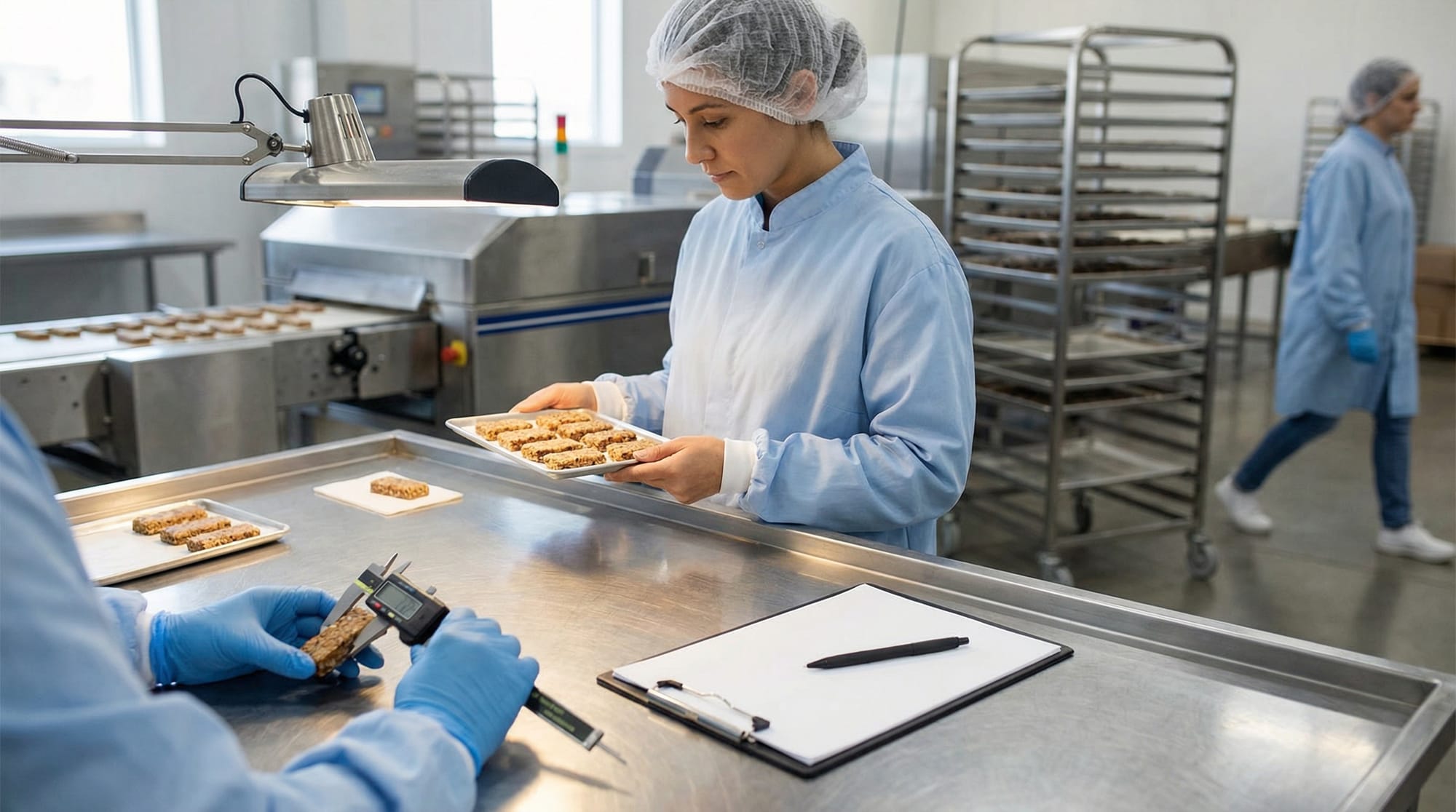
Visual inspection is still a front line defense in food production, especially where artisanal steps, hand finishing, or frequent changeovers are common. The problem is inconsistency. Different inspectors focus on different cues, paper checklists are skipped during rush periods, and defect photos get stored in random folders. A digital visual inspection practice makes the work consistent, teachable, and auditable.
- Standardize what “good” looks like: Build role specific digital checklists for incoming raw materials, in process product, finished goods, and packaging. Include clear pass fail criteria, defect categories, and escalation rules.
- Capture evidence at the point of inspection: Require photo capture for defects, rework, and borderline cases. Tag each photo with product, batch, line, operator, time, and location automatically.
- AI Aided Visual Inspection: Large vision models for repeatable checks such as fill level, missing components, foreign object detection, and color deviations. Configure alerts when thresholds are crossed, not after the shift ends.
- Close the loop with disposition workflows: A digital system should force a disposition choice, such as approve, hold, rework, scrap, supplier return, and should assign the next action to a person with a deadline.
Practical outcomes include fewer customer complaints about labeling and packaging defects, faster response during excursions, and a dataset that supports root cause analysis instead of blame based conversations.
2) Implement real time temperature monitoring for critical points and cold chain
Temperature control is a cornerstone of food safety, quality, and shelf life. Manual temperature logs can be fabricated unintentionally, measured late, or measured at the wrong point. IoT based monitoring creates continuous, timestamped records that are difficult to dispute and easy to analyze.
- Map critical temperature points: Include raw receiving, thawing, marination, cooking, cooling, holding, blast chilling, cold rooms, display chillers, delivery vehicles, and retail outlets if you supply them. Use HACCP and product risk to prioritize.
- Use calibrated sensors with defined accuracy: Document sensor accuracy, calibration frequency, and acceptable tolerance. Calibration records should be linked to the sensor ID inside the system.
- Set alert rules based on time and temperature: Food safety is often about combined exposure. Configure alerts such as “above 5 C for more than 10 minutes” or “cooling curve not achieved within 2 hours.”
- Automate corrective actions: When an excursion happens, the system should open a corrective and preventive action record, suggest immediate steps, and require completion evidence, such as moving stock, verifying product core temperature, or maintenance checks.
- Monitor product core temperatures digitally: For cooked items, integrate probe readings into a digital batch record. Require two point checks, for example thickest part and cold spot, based on SOP.
Beyond compliance, the cost benefit shows up in less spoilage, fewer emergency product holds, better shelf life consistency, and easier audits because temperature logs are always available.
3) Use automated inventory tracking with FEFO and quality status control
Quality issues are often inventory issues in disguise. If you cannot see what lot is where, what its expiry is, and whether it is released or on hold, you will either waste food or ship risk. Digital inventory tracking links material movement to quality events.
- Track by lot, batch, and location: Receiving should capture supplier, lot number, manufacture date, expiry, and COA references. Storage should track bin, rack, zone, and temperature zone.
- Apply FEFO, not only FIFO: First Expired First Out is essential in cold chain and high variety SKUs. A digital system can suggest picks automatically and prevent picking of blocked lots.
- Use quality status flags: Every lot should carry a status, such as quarantined, under test, released, hold, rejected, rework, or returned. Movement rules should prevent releasing or shipping held inventory.
- Integrate with scanning: Use QR coded scans at receiving, dispensing, and production issue points. Scans reduce manual typing errors and create traceability chains automatically.
- Connect inventory to deviations: When a temperature excursion or allergen event occurs, the system should identify affected lots and locations instantly, then lock them to prevent accidental use.
This practice reduces food waste, reduces avoidable stockouts, and makes product holds precise. Instead of blocking entire warehouses, you isolate exactly the impacted lots.
4) Build digital batch records and in process checks to reduce variability
If your plant relies on handwritten batch sheets, you know the pain, missing signatures, unclear numbers, corrections without reasons, and lost paperwork. A digital batch record system turns each batch into a structured dataset, improves discipline, and reduces variation.
- Digitize recipes and process parameters: Store target mix times, mixing speeds, cooking profiles, pH targets, Brix targets, moisture targets, and holding times. Make the latest approved version the only accessible version.
- Use step wise confirmations: Operators confirm each step completion, and the system can require checks before allowing the next step. This reduces skipped steps and improves training for new staff.
- Capture in process measurements: For example pH, water activity, viscosity, weight checks, metal detector checks, and seal checks. Tie each measurement to instrument IDs, calibration status, and operator.
- Enforce range checks: If a measurement is outside the allowed range, the system should prevent batch release and trigger rework or escalation workflows.
- Link to equipment events: If possible, connect SCADA or machine signals. Even partial integration, such as cooking temperature curves, can reduce manual reading errors.
Digital batch records make audits easier, but the bigger win is operational. Teams can see where variability starts, which shift has more deviations, and which product has more rework. That feeds improvement instead of repeated firefighting.
5) Strengthen allergen and cross contamination control with digital line clearance
Allergen control is a high stakes quality practice because the harm is immediate and severe. It also includes label accuracy, segregation, cleaning verification, and changeover discipline. Digital tools make allergen control verifiable and repeatable across shifts and sites.
- Create an allergen matrix and ingredient master: Tag each raw material with allergens, supplier, spec version, and substitution rules. Prevent uncontrolled substitutions in purchasing and production issue.
- Digitize line clearance: Before starting a new run, require a digital clearance checklist covering previous product removal, rework bins, tools, packaging materials, label rolls, and waste bins.
- Use cleaning verification workflows: Record cleaning start and end, chemicals used, concentration, contact time, and verification results, such as ATP swabs or allergen rapid tests. Attach results as photos or instrument exports.
- Implement positive release for allergen changeovers: Require QA approval in the system before production can proceed when allergen risk is high.
- Control label and packaging issuance: Tie label roll issuance to the planned order and require scan verification before use. Prevent mixing labels between SKUs.
A digital allergen program can reduce near misses, reduce rework due to wrong labels, and give leadership confidence that controls are followed even during peak demand periods.
6) Use connected sanitation and hygiene monitoring to prevent quality drift
Sanitation is often treated as a separate department, but it directly affects product quality, shelf life, and contamination risk. Hygiene compliance in changing rooms, handwashing, tool cleaning, and zone discipline is also crucial. Digital monitoring helps you see patterns across time and sites.
- Digitize SSOPs: Convert sanitation standard operating procedures into mobile tasks with required evidence. Include photo checkpoints, chemical concentration records, and verification signoffs.
- Schedule tasks based on risk and usage: Some sanitation tasks should be triggered by production hours or product type, not only by the calendar. Digital scheduling supports both.
- Track hygiene compliance: Use checklists, QR checkpoints at entrances, and supervisor verifications. If you have sensors, track door openings and zone access for high risk areas.
- Connect micro results to sanitation records: When environmental swabs or product micro results are available, link them to the sanitation schedule and specific line. That enables targeted improvement instead of blanket “clean more.”
- Trend sanitation performance: Trend missed tasks, repeated non conformances, chemical usage, and pass rates. Use those trends to adjust staffing and training.
Well run digital sanitation reduces micro related holds, improves shelf life stability, and supports a culture where cleanliness is measured and managed, not assumed.
7) Digitize supplier quality management from COA capture to scorecards
In many food operations, the majority of quality variation enters through raw materials, packaging, and co manufactured inputs. A digital supplier quality practice collects evidence, creates supplier visibility, and reduces surprises at receiving.
- Centralize specifications: For each material, store the approved spec with critical limits, sensory expectations, packaging requirements, allergen declarations, and acceptable substitutions.
- Capture COA and documents digitally: Link COA, halal or kosher certificates, organic declarations, and lab reports to the specific supplier lot received. This should be searchable by lot and by supplier.
- Use risk based incoming inspection: Not all suppliers need the same level of inspection. Use history and criticality to decide sampling frequency, tests required, and whether to quarantine until results.
- Track supplier non conformances: Record defects, such as out of spec moisture, damaged packaging, infestation, incorrect labeling, late deliveries impacting temperature, and foreign matter. Require supplier CAPA responses.
- Maintain supplier scorecards: Combine quality, delivery, responsiveness, and documentation completeness into a score. Use it for supplier development and purchasing decisions.
This practice reduces production disruptions, lowers the cost of poor quality, and gives procurement and QA a shared view of supplier performance.
8) Apply statistical process control and automated trend alerts
Traditional QC often discovers problems after the fact. Statistical process control, when digitized, helps detect drift early. You do not need a data science team to get value. Start with a few critical parameters and build from there.
- Choose critical to quality parameters: Examples include weight, fill volume, pH, salt percent, moisture, frying oil quality, viscosity, headspace oxygen, seal strength, and cooking yield.
- Define sampling plans: Set how often to measure, how many samples, and which line positions. Make the plan visible to operators and supervisors with reminders and overdue alerts.
- Use control limits and rules: Build charts and apply rules like trends, shifts, and repeated near limit results. Alert before you hit out of spec to avoid scrap.
- Measure measurement system health: Ensure instruments are calibrated, and periodically check repeatability. Digital records should link measurement results to instrument calibration status.
- Turn insights into actions: When a trend alert fires, create a task for a line leader to check settings, raw material changes, or maintenance condition. Require a recorded action and verification result.
Digitized SPC can reduce giveaway on weight control, reduce rework, and stabilize sensory quality by catching drift before customers notice.
9) Integrate traceability, mass balance, and recall readiness into daily operations
Traceability should not be a once a year exercise. It should be a daily capability built from scanning, lot level inventory, digital batch records, and shipment records. If you can do forward and backward trace in minutes, you reduce the business impact of incidents.
- Ensure one step back, one step forward data is complete: Link supplier lots to production batches, and production batches to customer shipments. Do not rely on memory or paper delivery notes.
- Use mass balance checks: Compare input quantities to outputs including waste, rework, and yield. Large discrepancies can signal recording errors, theft, or unreported rework.
- Conduct mock recalls digitally: Run a scenario quarterly. Measure time to identify impacted lots, time to identify customers, and time to generate required reports. Store evidence for auditors.
- Define recall roles and contact lists: Keep up to date contacts for internal teams, suppliers, logistics partners, and customers. A system should generate communication templates quickly.
- Lock and release product digitally: During an investigation, prevent shipping without relying on emails. Inventory status control and shipping blocks protect you from accidental dispatch.
Recall readiness is both a compliance requirement and a brand protection strategy. Digitization reduces the time, scope, and cost of response when something goes wrong.
10) Maintain audit trail excellence with CAPA, training records, and immutable logs
Audit readiness is not only about passing audits. It is about having evidence that your system works. Digital audit trails connect the dots between deviations, investigations, corrective actions, preventive actions, and training. They also prove that checks were done when they were supposed to be done.
- Use structured non conformance reporting: Every deviation should have a category, severity, product impact assessment, immediate containment, and owner. Require supporting evidence such as photos, sensor graphs, and test results.
- Implement CAPA workflows: For significant issues, require root cause analysis, action plan, due dates, verification of effectiveness, and closure approval. Prevent “close without proof.”
- Digitize training and competency: Link SOPs to roles and track completion, quiz results, and refresh intervals. When an SOP changes, automatically assign retraining to impacted roles.
- Use role based access and e signatures: Ensure only authorized users can approve releases, change specs, or close CAPAs. Record e signatures with timestamps to match regulatory expectations.
- Create immutable activity logs: Store who changed what and when. This helps during investigations and deters unauthorized edits in critical records.
When audit trails are strong, audits become faster and less disruptive. More importantly, the business becomes better at learning from problems and preventing repeats across sites.
How to prioritize these practices in a real food plant or central kitchen
Implementing all 10 at once can overwhelm teams. A practical approach is to start with the most risk driven and most waste driven areas, then expand.
- Phase 1, protect food safety first: Real time temperature monitoring, allergen control with digital line clearance, sanitation monitoring, and audit trail basics for deviations.
- Phase 2, stabilize quality and reduce cost: Digital batch records, SPC on critical parameters, and automated inventory tracking with FEFO and quality status.
- Phase 3, scale across sites and suppliers: Supplier quality scorecards, advanced traceability drills, and broader computer vision for packaging and process checks.
For multi outlet networks, it also helps to standardize by site type. For example central kitchen controls, depot controls, and retail outlet controls. A platform like UdyogYantra.AI is designed for that kind of complexity, where manual workflows, artisanal steps, and distribution challenges coexist.
Common pitfalls to avoid when digitizing quality control
- Digitizing bad paperwork: If a checklist is unclear on paper, it will be unclear on a tablet. Improve the standard first, then digitize.
- Collecting data without action: Measurements must trigger decisions. Build thresholds, alerts, owners, and due dates so data leads to action.
- Not managing change: Operators need training, simpler screens, and feedback loops. If digital tools slow work, people will find workarounds.
- Ignoring calibration and master data: Bad instruments and outdated specs create bad decisions. Maintain calibration schedules and spec version control.
- Assuming audits are the goal: The goal is consistent product quality, safety, and lower waste. Audits become easier as a result.
Key metrics to track after implementation
To prove value and keep improving, track a small set of metrics tied to safety, quality, and cost.
- Food safety leading indicators: temperature excursion count, time to corrective action, sanitation task completion rate, allergen line clearance compliance.
- Quality indicators: defect rate by type, rework rate, customer complaints, on time batch release, sensory deviations.
- Waste and cost indicators: scrap quantity, yield loss, giveaways, expiry write offs, time spent on manual reporting.
- Traceability and audit indicators: mock recall time to trace, CAPA closure time, training compliance, audit findings severity.
Use dashboards to make these metrics visible for shift huddles and weekly reviews. When teams see trends early, they can correct course before problems become expensive.
Conclusion
Digital quality control is a competitive advantage in food manufacturing because it turns quality from a reactive department into a real time operational capability. From digitized visual inspections and temperature monitoring to FEFO inventory control and audit trail excellence, these 10 practices help maintain consistent product quality, reduce waste, and strengthen traceability across complex supply chains.
Whether you are modernizing a central kitchen, a factory line, or a multi outlet distribution network, the best results come when digital tools are connected end to end. Sensors create trustworthy data, ERP workflows ensure disciplined actions, and analytics reveal what to fix next. That is how traditional food craftsmanship scales safely in an Industry 4.0 environment.